If you’re serious about starting a career in trucking, delivery, or commercial transportation, enrolling in a commercial driving school is one of the smartest steps you can take. It’s not just about passing a test—it’s about learning real-world driving skills, safety procedures, and job-ready confidence.
CDL training programs are designed to prepare you for the road by building the exact skills employers want: safe driving habits, vehicle control, inspection routines, and knowledge of regulations. Whether you’re brand new to trucking or looking to upgrade your license, a quality commercial driving school can help you get licensed faster—and start working sooner.
Why a Commercial Driving School Is the Best Way to Earn Your CDL
Getting your CDL isn’t only about driving. It includes rules, safety checks, and vehicle handling under different conditions. A professional commercial driving school helps you learn the full picture instead of guessing your way through the process.
Here’s why most successful drivers choose CDL training programs instead of trying to figure it out alone:
- Structured training schedule
- Professional instructors with real industry experience
- Hands-on practice with commercial vehicles
- Step-by-step CDL exam preparation
- Confidence-building behind-the-wheel training
If you’re aiming for long-term success in the industry, a commercial driving school gives you a smoother start and a better foundation.
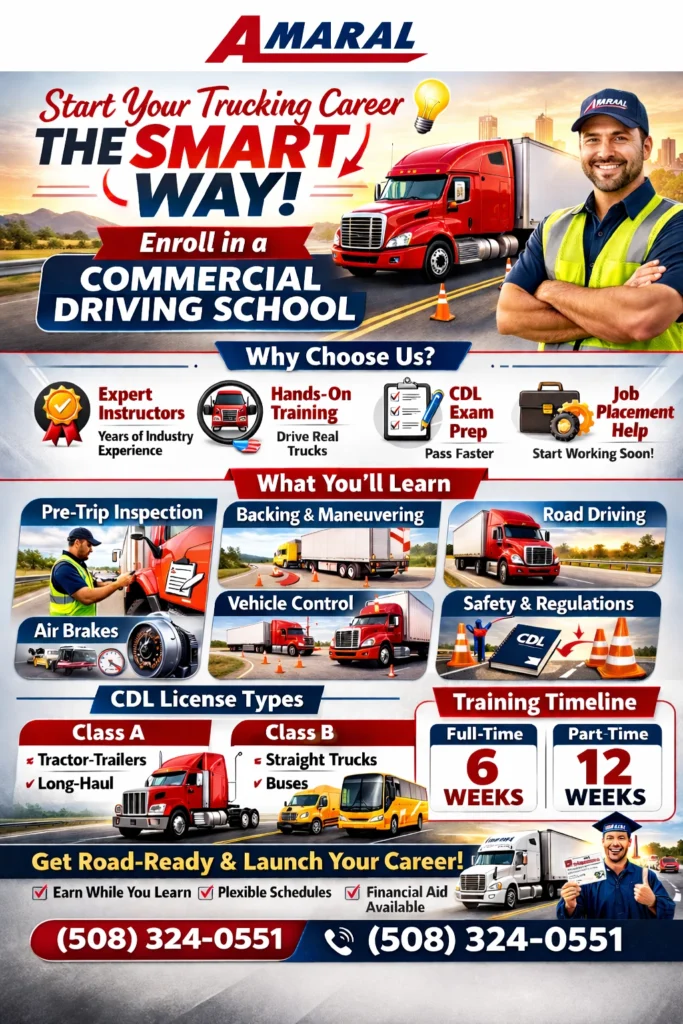
What You Learn in CDL Training Programs (Beyond Just Driving)
Many people assume CDL training is just “learn to drive a big truck.” But a proper commercial driving school teaches you skills that directly affect safety, pass rates, and job performance.
1. Vehicle Inspection (Pre-Trip Inspection)
A big part of CDL testing and real-world driving is knowing how to inspect your vehicle for safety issues.
In training, you’ll learn how to check:
- Brakes & air systems
- Tires, tread, and wheel condition
- Lights, reflectors, and signals
- Fluid levels and engine components
- Trailer connections and coupling
This step matters because inspection mistakes are one of the most common reasons drivers fail the CDL exam.
2. Basic Vehicle Control (Backing + Maneuvering)
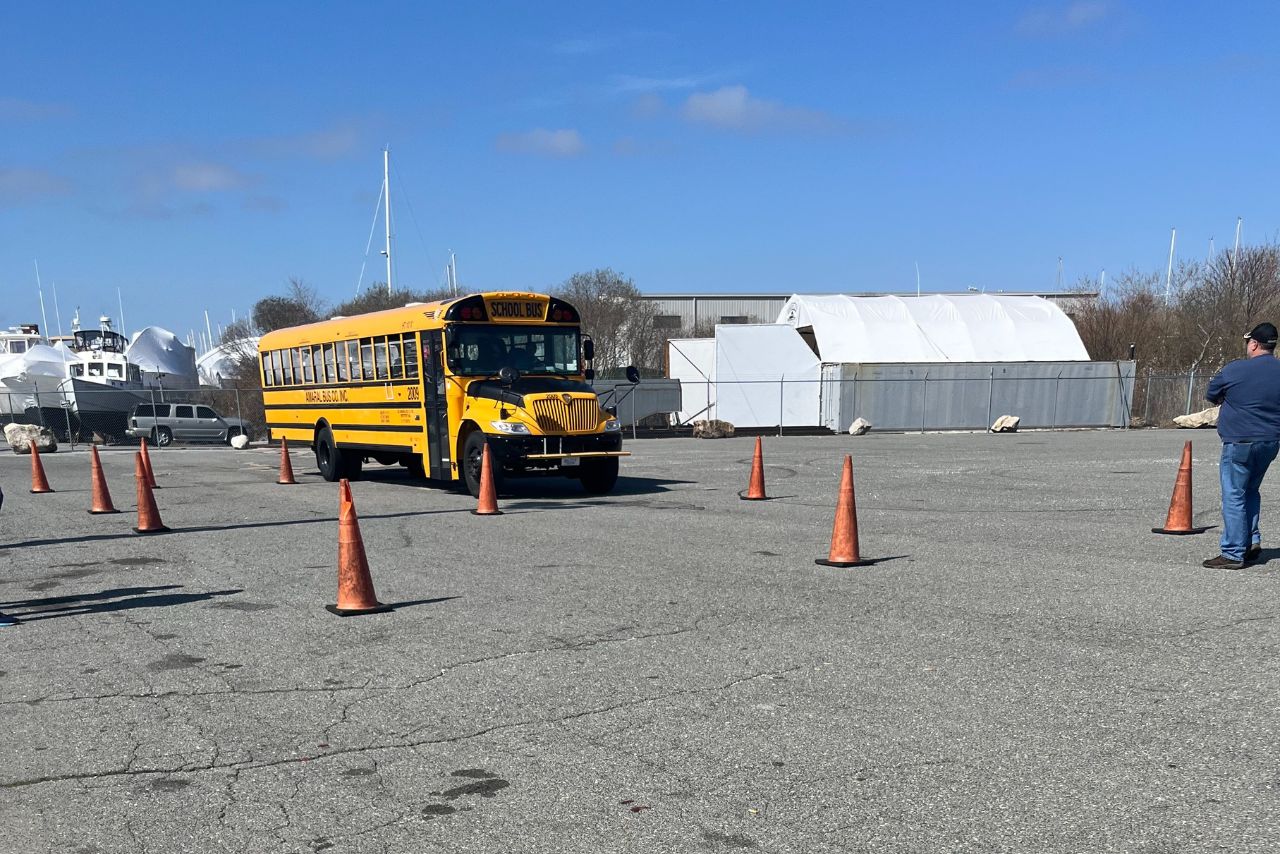
Commercial vehicles require skill and precision—especially when backing up, parking, and turning.
A commercial driving school trains you on:
- Straight-line backing
- Offset tracking
- Pre-trip
- Air Brake
- Forward Stop
- Reverse offset backing
- Safe turning and lane positioning
The goal is to make these actions feel controlled and repeatable—so you’re not nervous on test day.
3. Road Driving Skills (Real Traffic + Real Conditions)
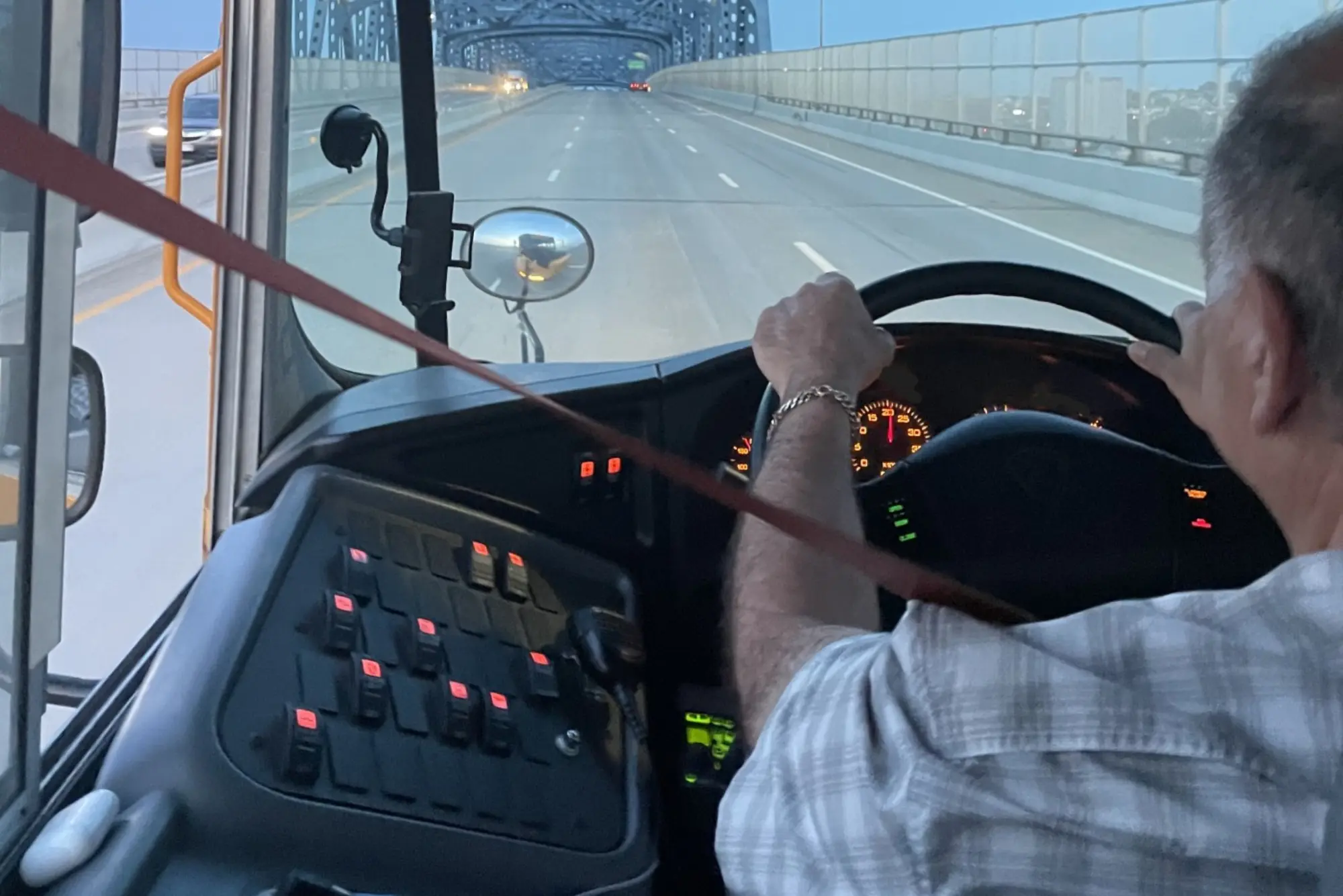
Behind-the-wheel training is where students build confidence fast.
You’ll practice:
- Merging and highway driving
- Lane changes and space management
- Controlled braking techniques
- Railroad crossing procedures
- Safe driving in different conditions
- Upshifting & downshifting a manual 10-speed transmission
This is what makes CDL training programs truly road-ready—you learn how to think like a professional driver.
4. CDL Rules, Safety, and Regulations
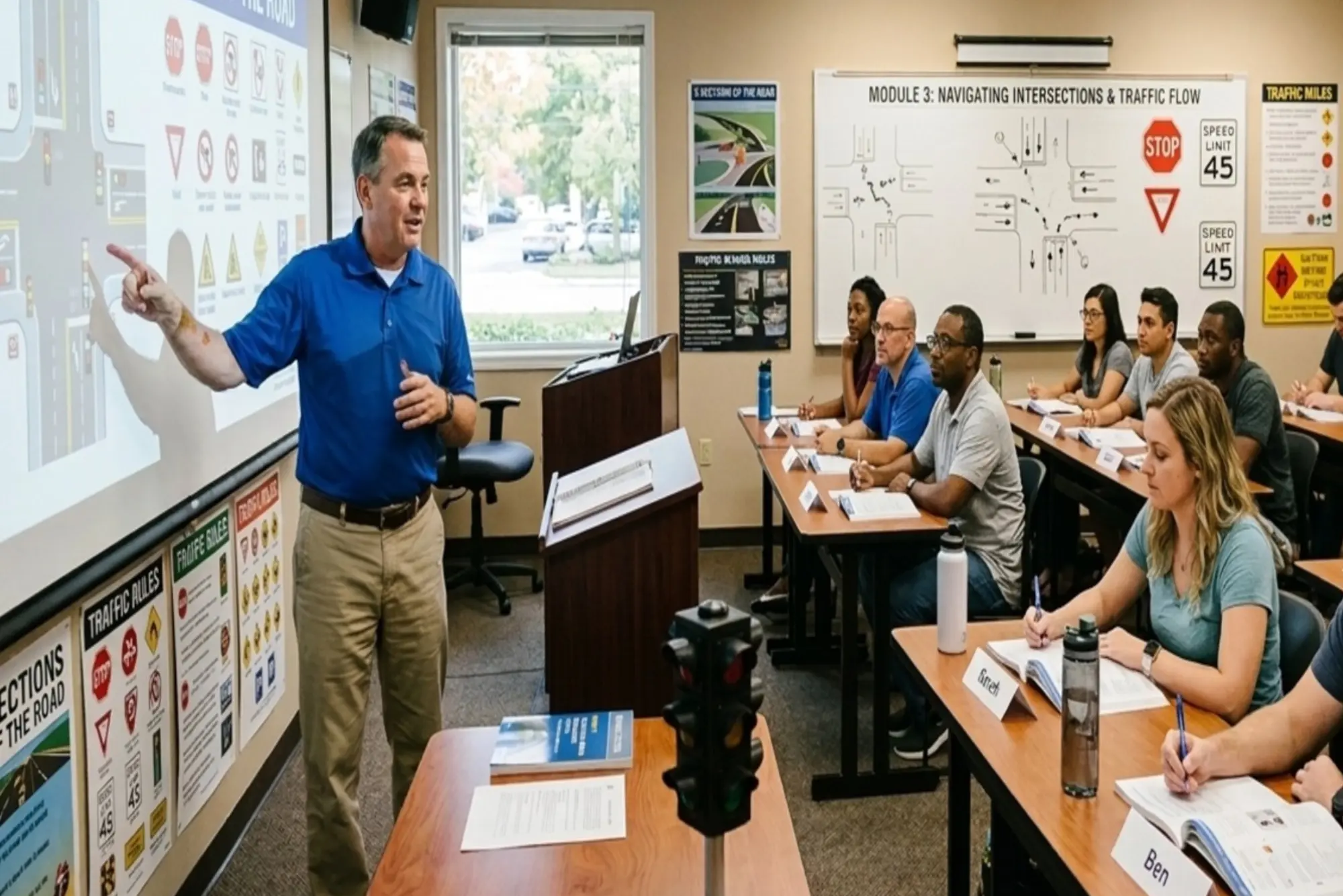
Commercial drivers must follow strict safety and compliance regulations. A good school trains you to understand these rules clearly so you don’t get overwhelmed.
Common topics include:
- Hours of Service (HOS) basics
- Weight limits and loading safety
- Drug & alcohol compliance awareness
- Defensive driving habits
- Proper documentation and trip readiness
CDL License Types: Which One Is Right for You?
A commercial driving school can guide you toward the right CDL path based on your goals.
CDL Class A
Best for:
- Tractor trailers
- Long-haul trucking
- Heavy-duty transportation jobs
If your goal is the widest job opportunities, Class A CDL is usually the strongest option.
CDL Class B
Best for:
- Straight trucks
- Dump trucks
- Box trucks
- Buses and local routes
This is a great option if you want local work, shorter routes, or a specific trade.
Signs You’ve Found a High-Quality Commercial Driving School
Not all training programs are the same. If you’re comparing options, here are the most important things to look for.
- Hands-on driving time (not just classroom)
- Clear training schedule + step-by-step instruction
- Experienced instructors who correct mistakes fast
- CDL exam preparation support
- Safe training vehicles + proper practice area
A good commercial driving school should prepare you for more than the test—it should prepare you for your first day on the job.
How Long Does CDL Training Take?
This depends on your license goal and your availability, but most CDL programs run:
- Six weeks for full-time students
- 2 weeks of classroom training, 4 weeks of hands-on training
- 2 weeks of classroom training, 4 weeks of hands-on training
- 12 weeks for part-time or weekend options
- 2 weeks of classroom training, 10 weeks of hands-on training
- 2 weeks of classroom training, 10 weeks of hands-on training
The key is consistency. The more frequently you practice, the faster your confidence improves.
Commercial Driving School Benefits That Employers Respect
Employers want drivers who can safely operate equipment and follow procedures. Completing a structured training program shows you’re serious and prepared.
A strong CDL program builds:
- Safety habits and decision-making skills
- Professional confidence in traffic
- Better communication and awareness
- Stronger job readiness from day one
This matters because trucking and commercial transportation companies value safe drivers long-term, not risky drivers who pass a test and struggle later.
CDL Training That Gets You Road-Ready
A commercial driving school gives you more than a license—it gives you the training, confidence, and skills needed to start working safely and professionally.
If you want to earn your CDL and be truly prepared for real driving, real routes, and real job expectations, a structured CDL training program is the best way to get road-ready—and stay successful long-term.